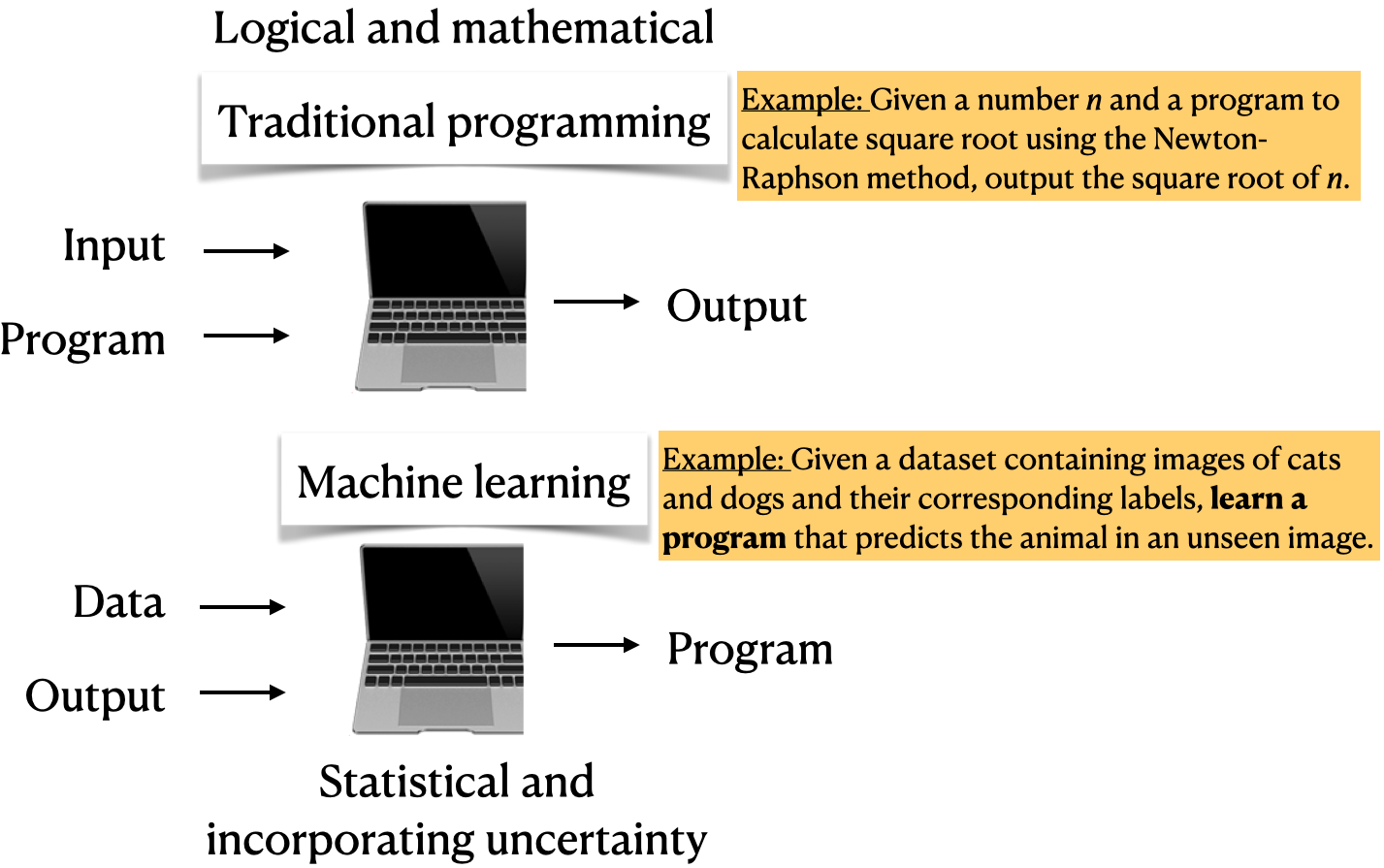
In all the the upcoming examples, Don’t worry about the code. Just focus on the input and output in each example.
train_df, test_df = train_test_split(df, test_size=4, random_state=16)
train_df.head()
5 rows × 10 columns
from xgboost import XGBClassifier
X_train = train_df.drop(columns=['Target'])
y_train = train_df['Target']
X_test = test_df.drop(columns=['Target'])
model = XGBClassifier()
model.fit(X_train, y_train);
pred_df = pd.DataFrame(
    {"Predicted label": model.predict(X_test).tolist()}
)
df_concat = pd.concat([X_test.reset_index(drop=True), pred_df], axis=1)
df_concat
4 rows × 10 columns
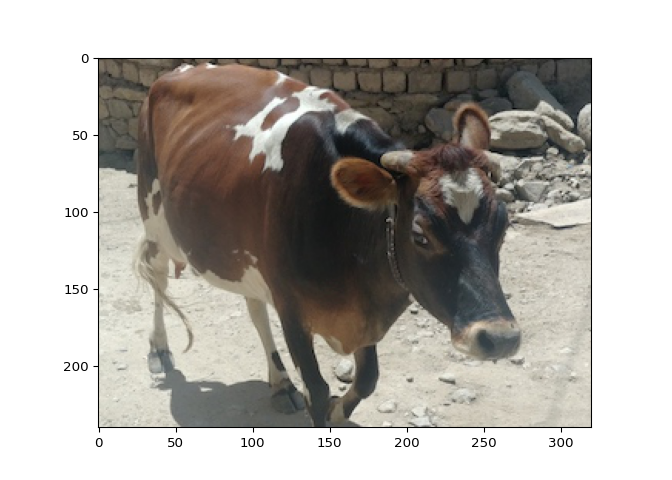
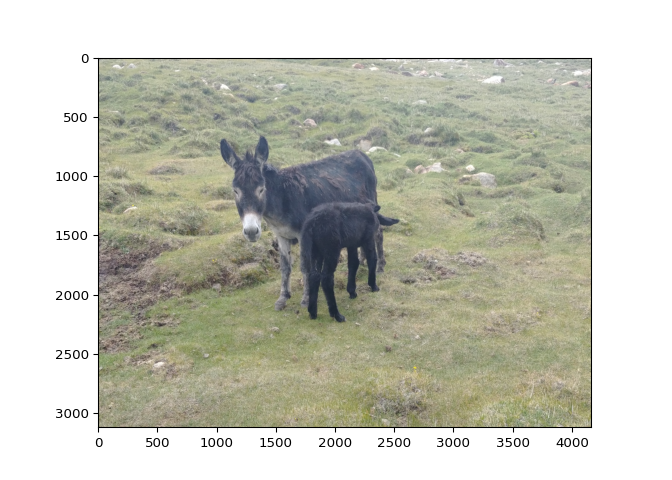
images = glob.glob("test_images/*.*")
for image in images:
    img = Image.open(image)
    img.load()
    plt.imshow(img)
    plt.show()
    df = classify_image(img)
    print(df.to_string(index=False))
  Class  Probability
      ox     0.869893
  oxcart     0.065034
  sorrel     0.028593
 gazelle     0.010053
            Class  Probability
            llama     0.123625
               ox     0.076333
           kelpie     0.071548
 ibex, Capra ibex     0.060569
Attribution: The dataset imdb_master.csv was obtained from Kaggle and downsampled for demonstration
imdb_master.csv
train_df.head()
X_train, y_train = train_df['review'], train_df['label']
X_test, y_test = test_df['review'], test_df['label']

clf = Pipeline(
    [
        ("vect", CountVectorizer(max_features=5000)),
        ("clf", LogisticRegression(max_iter=5000)),
    ]
)
clf.fit(X_train, y_train);
pred_dict = {
    "reviews": X_test[0:4],
    "true_sentiment": y_test[0:4],
    "sentiment_predictions": clf.predict(X_test[0:4]),
}
pred_df = pd.DataFrame(pred_dict)
pred_df.head()
Attribution: The dataset kc_house_data.csv was obtained from Kaggle and downsampled for demonstration.
kc_house_data.csv
df = pd.read_csv("data/kc_house_data.csv")
train_df, test_df = train_test_split(df, test_size=0.2, random_state=4)
train_df.head()
5 rows × 19 columns
X_train = train_df.drop(columns=["price"])
X_train.head()
5 rows × 18 columns
y_train = train_df["price"]
y_train.head()
608    219000.0
511    618250.0
641    200000.0
112    656500.0
535    530000.0
Name: price, dtype: float64
X_test = test_df.drop(columns=["price"])
y_test = train_df["price"]
from xgboost import XGBRegressor

model = XGBRegressor()
model.fit(X_train, y_train);
pred_df = pd.DataFrame(
    {"Predicted price": model.predict(X_test[0:4]).tolist(), "Actual price": y_test[0:4].tolist()}
)
df_concat = pd.concat([X_test[0:4].reset_index(drop=True), pred_df], axis=1)
df_concat.head()
4 rows × 20 columns