Work Organization and Retrospective
Issue Assignment, Milestones, and Project Boards
Our project management relied heavily on GitHub’s collaborative features:
- Issues: Every feature, bug, and major decision started as an issue. Each issue was assigned to relevant team members and linked to specific milestones (e.g., milestone3 and milestone4). This ensured accountability and made progress transparent.
- Project Boards: We used a GitHub Project Board with columns for Backlog, Ready, In progress, In review, and Done, allowing us to visualize task flow and individual workload at a glance. Team and individual performance could be assessed by filtering cards by assignee.
- Milestones: All issues required for this course milestone were grouped under the relevant release milestone. This grouping allowed us to track overall milestone completion and prioritize critical tasks.
Reflection:
We found that explicitly assigning and labeling issues, and regularly updating the board, reduced confusion and prevented overlap in work. Linking pull requests to issues and milestones provided a clear audit trail of our development process.
Analytical Project Board Views & Data-Driven Retrospective
We grounded our reflection in actual project board analytics, supported by saved GitHub Project views.
Velocity: How did our scope change over time?
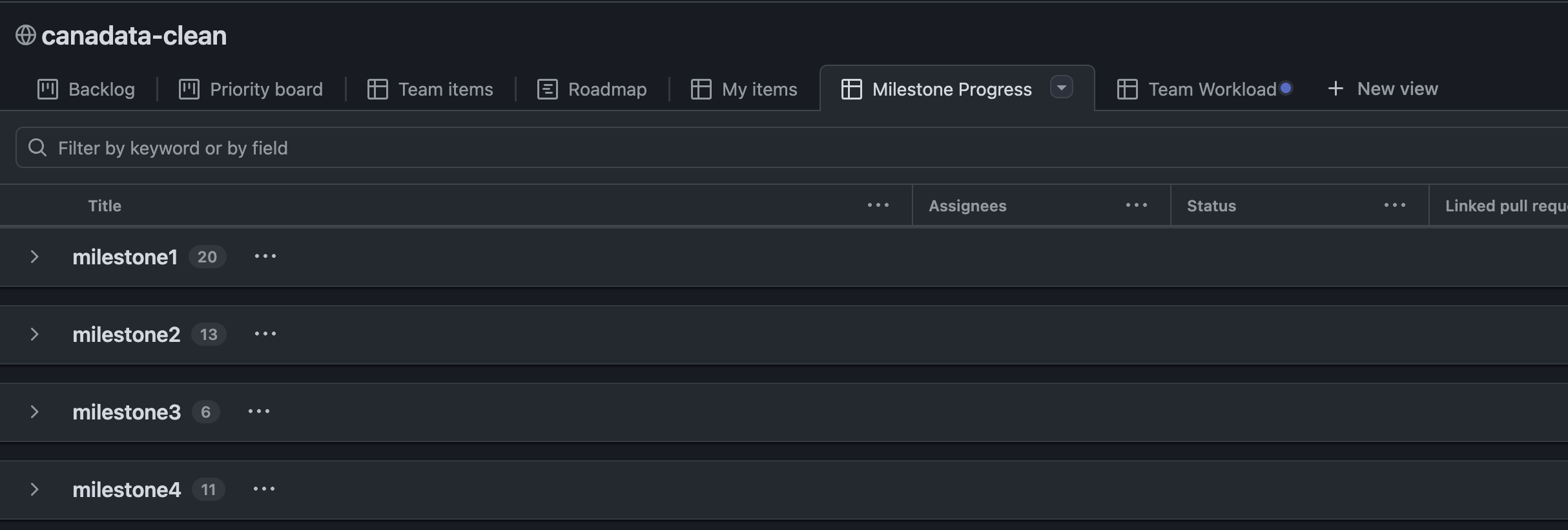
Our velocity view shows the progression of issues per milestone: 20 for Milestone 1, 13 for Milestone 2, 6 for Milestone 3, and 11 for Milestone 4. This indicated that our initial planning cast a very wide net; over time, we streamlined our focus, improved our estimation, and concentrated on key deliverables.
Burn-up Chart: Did M2 (writing code) have more issues than M3 (GitHub Actions/documentation)? Were there leftover Todos?
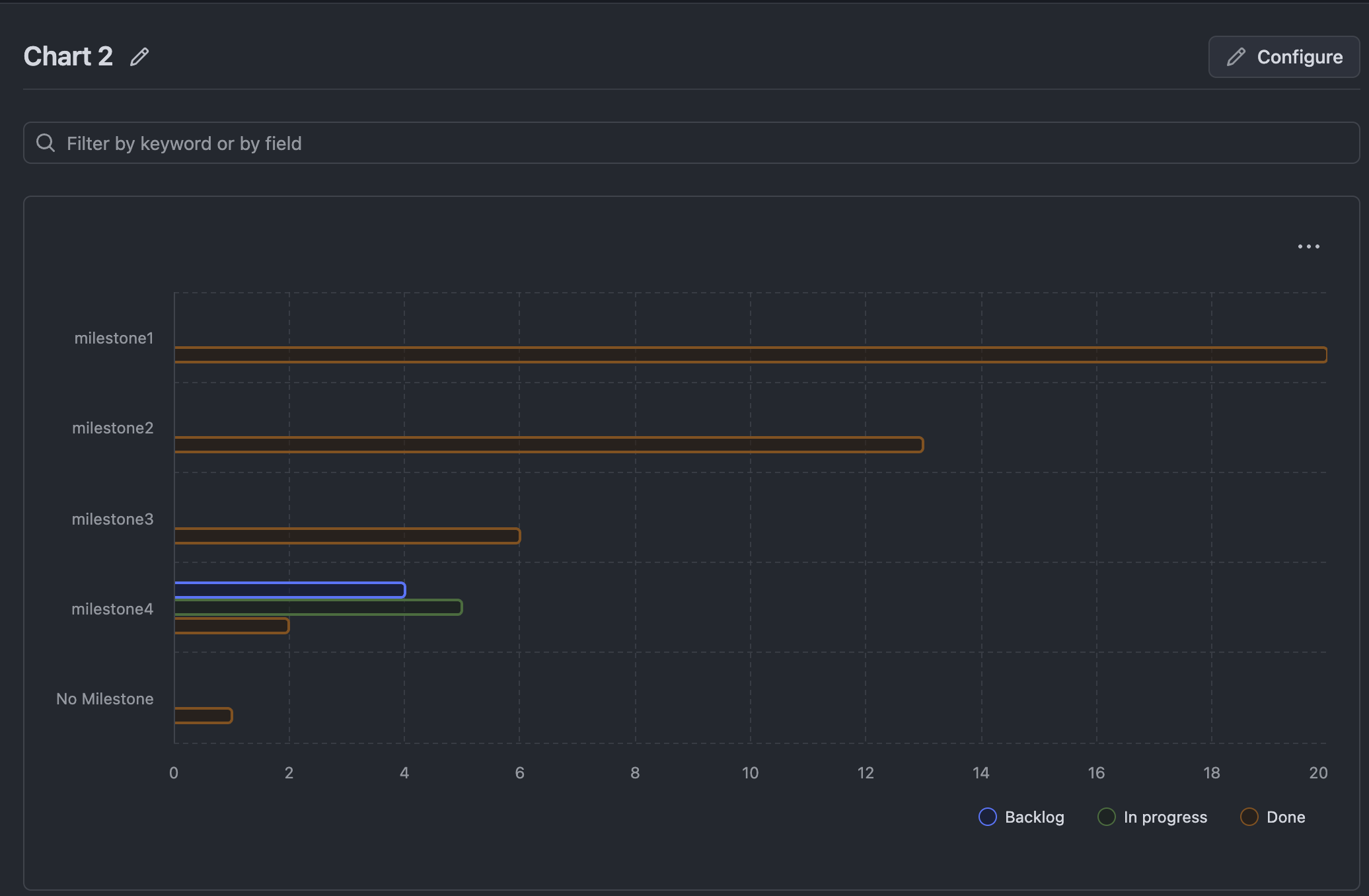
The burn-up data illustrates that Milestone 2 (core code development) had a greater number of issues completed compared to Milestone 3 (GitHub Actions and documentation). This matches our workflow—most complexity happened early.
Our chart also shows most items were completed (“Done”), especially for early milestones. However, for Milestone 4, a few items remained in “Backlog” or “In Progress,” suggesting minor over-commitment towards the end.
Team Contributions: Did everyone contribute equally?
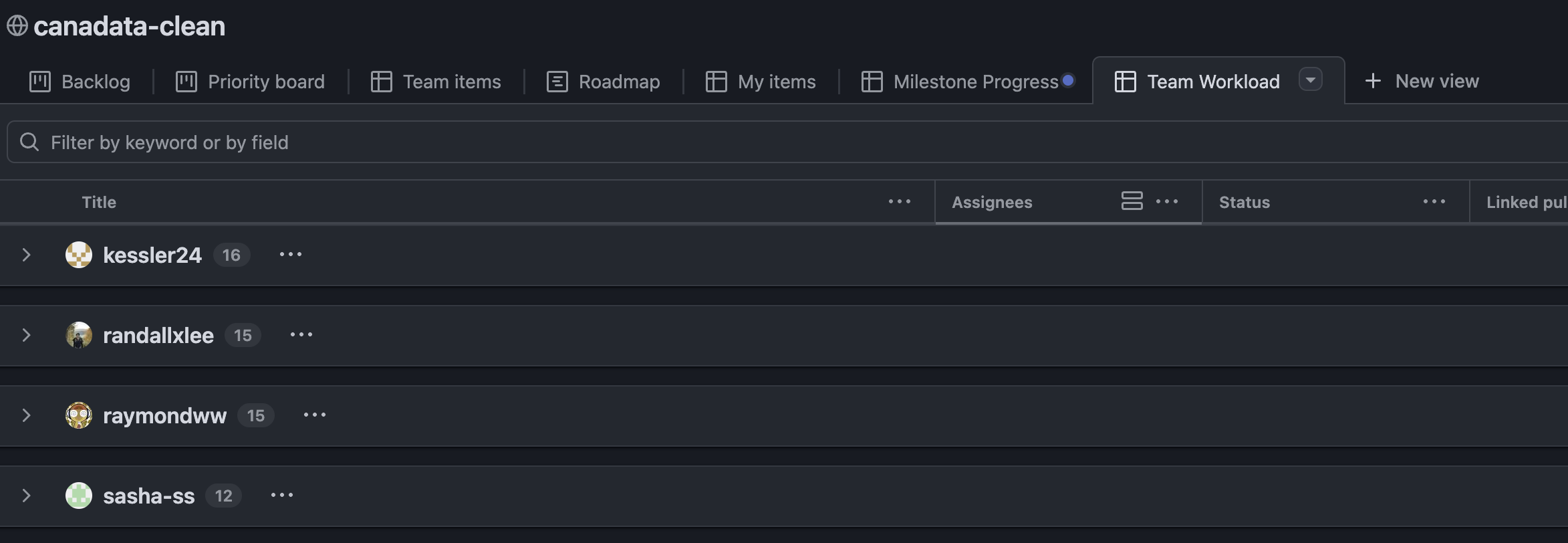
The Team Workload view demonstrates our effort towards equitable workload: - kessler24: 16 items - randallxlee: 15 items - raymondww: 15 items - sasha-ss: 12 items
The slight difference is mainly due to division of labor (some members prioritized complex logic, others handled more numerous but smaller docs/tasks). Regular check-ins and proactive redistribution avoided bottlenecks, and workload was kept fair throughout.
Development Tools, Infrastructure, and Organizational Practices
- Git Flow: We used a development (
documentation_dev) branch for integrating features before merging tomain, which improved code quality at the cost of rare merge conflicts. - CI/CD: GitHub Actions provided automated testing, linting, documentation builds, and Netlify preview deployments for every PR. Test coverage was tracked continuously.
- Documentation: Used
quartodocfor API docs and Quarto for prose guides—with Netlify/PR preview for real-time feedback. - Code Reviews: All PRs required peer review, improving team code quality and knowledge sharing.
- Communication: Issues and PRs were our primary communication channels—avoiding fragmented channels like Slack or email.
Scaling Up Recommendations: For larger projects, we would use: - More advanced project board automations (e.g., epic/dependency tracking), - Stricter branch protections and continuous delivery, - Wiki/Discussions for persistent technical notes, - Enhanced issue templates and changelogs.
DAKI Retrospective
Drop:
- Last-minute “review pileups”—regular, shorter review sessions would improve speed and reduce risk of delay. - Creating issues without immediate assignee or milestone tags.
Add:
- Use of GitHub issue templates for fine-grained bug/feature tracking. - Routine project board hygiene checks for improved analytics.
Keep:
- Project board views (velocity, team workload, milestone progress). - PR documentation previews for rapid, peer-driven documentation quality assurance.
Improve:
- Estimating/documentation and review time as part of every milestone (not just code). - Promoting cross-review and responsibility rotation to increase resilience and limit bottlenecks.
Reflections
- Successes: Documentation previews and continuous feedback improved our product quality and reduced integration friction.
- Improvements: Early ambiguity in issue descriptions was resolved by using checklists and clearer acceptance criteria.
- Teamwork: Our data-driven approach and regular check-ins ensured fair workload distribution and collective project ownership.
Prepared by canadataClean, 2025-26 DSCI-524 Group 02